
Loading Screen Prank
Customize a video title, duration, and believable loading point in a harmless browser-only buffering simulation.
Related tools


Practical uses for Loading Screen Prank
- Create a generic buffering scene for a video.
- Run a consent-based waiting-screen joke.
- Prototype loading and retry states without copying a platform.
A careful three-step workflow
- 1
Set a believable video title and duration.
- 2
Choose where the video should appear to stop loading.
- 3
Open fullscreen and press Escape whenever you want to leave.
Interpret the result in context
- No real video is loaded; the player and timeline are a local visual simulation.
- The title stays in this browser unless you explicitly create a share link.
- State for Loading Screen Prank is processed locally and resets from the normal page view.
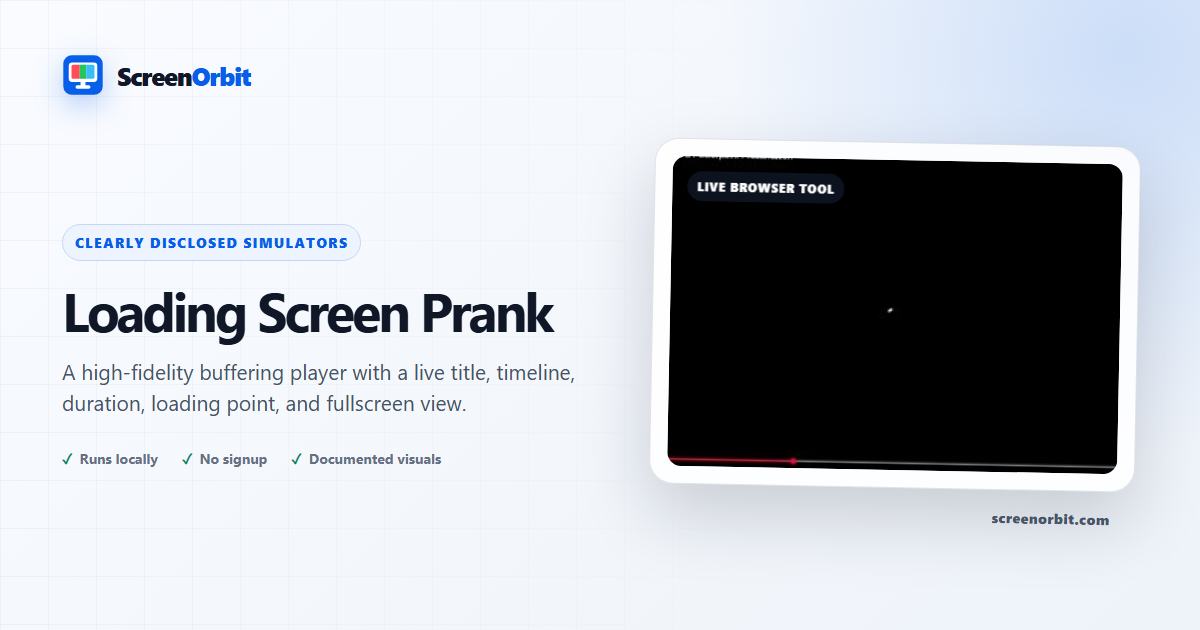
A high-fidelity player scene with focused setup controls
Loading Screen Prank uses a clean black player surface modeled from the authorized WhiteScreen.digital reference. The title, animated buffer indicator, progress rail, current/duration display, transport icons, subtle gradients, and hover behavior are rendered live in the browser. The player chrome fades after inactivity and returns on pointer movement, touch, or keyboard focus, just as viewers expect.
The familiar player arrangement appears without loading a real video or contacting a video service. Set the title and duration in plain language, choose the loading point with the slider, or fine-tune it directly on the timeline. Reset restores a believable 23:50 / 25:00 starting scene.
Stage the scene
Choose a believable title, duration, and loading point, then open the player fullscreen deliberately. The share action creates a URL-fragment link containing the player setup only after you select it, while Reset returns every visible field to its default. No audio is played.
Use it without causing harm
Use only as a brief consent-based joke or production prop. Do not imitate a paid livestream, examination, medical appointment, emergency broadcast, or other time-sensitive event. Never ask someone to reinstall software, share credentials, call support, or make a payment because of the simulated loading state.
Fullscreen never starts automatically and Escape exits normally. The animation pauses in a hidden tab and respects reduced-motion preference. For a system-style progress scene choose a clearly disclosed Fake Update Simulator; for a static creative signal cue use No Signal Screen.
Plan a useful session with Loading Screen Prank
Loading Screen Prank works best when you start with one question. Decide what you need to view, compare, create, record, or demonstrate. Keep the first run at the default state. Change one control after you understand the starting result. This approach gives you a clear baseline and a useful reason for every adjustment.
Customize a video title, duration, and believable loading point in a harmless browser-only buffering simulation. Use the normal page view to prepare the settings. Enter fullscreen only after you review the exit control. Write down the mode and key values when you need to repeat the result on another device.
Choose controls by outcome
The available modes include the default mode. The control set includes fullscreen, animation, keyboard, safe exit, reset. Start with the option closest to your task. Avoid changing every value at once. A single change gives you a direct before-and-after comparison and makes a saved result easier to explain.
- Create a generic buffering scene for a video. Set a clear finish point before you begin.
- Run a consent-based waiting-screen joke. Set a clear finish point before you begin.
- Prototype loading and retry states without copying a platform. Set a clear finish point before you begin.
Run a repeatable workflow
- Stage 1. Set a believable video title and duration. Record the starting environment and state.
- Stage 2. Choose where the video should appear to stop loading. Keep the first comparison short and controlled.
- Stage 3. Open fullscreen and press Escape whenever you want to leave. Reset the page when the session ends.
For a device comparison, use the same browser family, viewport, room light, physical brightness, and viewing distance where practical. Run the same order on both devices. Change one environmental factor only after the matched pass is complete. Keep this route focused on this use: Create a generic buffering scene for a video.
Keep a useful record
A useful record names the page, mode, control values, browser, device, viewport, date, and viewing condition. For a visual observation, describe the location and the fields where the effect appears. For a generated asset, record dimensions, format, color values, and the downloaded file name. For a simulation, record the duration, custom text, disclosure, and exit method. The starting reference for this page is default mode.
- No real video is loaded; the player and timeline are a local visual simulation.
- The title stays in this browser unless you explicitly create a share link.
Avoid common setup errors
- For this use, do not treat a browser view as a hardware measurement or system action: Create a generic buffering scene for a video.
- Do not change several settings before you record the baseline. Begin with default mode.
- Do not rely on a phone photograph as the only evidence. Keep this route limit in view: No real video is loaded; the player and timeline are a local visual simulation.
- Do not leave route features active after the task ends. The main controls include fullscreen, animation, keyboard, safe exit.
- Do not add private data, credentials, payment details, or confidential text. Keep the second listed use in scope: Run a consent-based waiting-screen joke.
Continue with the closest comparison
Open a related route when the first page reveals a new question. Keep the same environment and repeat only the part needed for comparison. The closest listed routes are Computer Virus Prank, Windows 11 Fake Update, Hacker Typer Screen. Keep this final use in mind: Prototype loading and retry states without copying a platform.
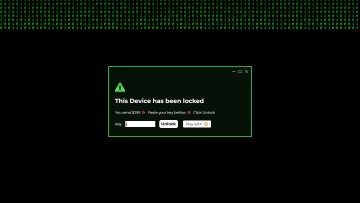
- Computer Virus Prank. A fictional system-alert animation that performs no scan, lock, download, or system action.
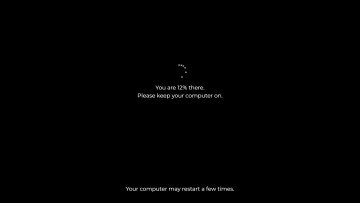
- Windows 11 Fake Update. A modern update scene with responsive typography, live animation, and fictional status copy.
- Hacker Typer Screen. Type anything to reveal original fictional code in terminal, security-lab, or sci-fi themes.
Recommended guides
Questions about Loading Screen Prank
What does Loading Screen Prank do?
Customize a video title, duration, and believable loading point in a harmless browser-only buffering simulation. Create a generic buffering scene for a video. Run a consent-based waiting-screen joke.
Who gets the most value from this page?
Use this page when your task matches the listed purpose. Create a generic buffering scene for a video. Run a consent-based waiting-screen joke. Start with a clear goal and stop once the page answers that goal.
Which Loading Screen Prank setting should you choose first?
Start with the default view and the controls listed beside the preview. Keep the default state for the first pass. Change one control, review the result, then record the setting before another change.
What should you prepare before fullscreen?
Get permission from the device owner. Rehearse Escape and keep the session short. Choose a setting where a false screen will not interrupt work or safety. Set a believable video title and duration. Choose where the video should appear to stop loading.
Does this page change hardware or system settings?
The scene runs inside one browser tab. The page does not read files, lock the device, inspect accounts, request payment, or perform a system action. The default mode and Reset affect local page state only.
How should you judge the result?
Treat the page as disclosed entertainment or a planned production prop. End the scene as soon as the viewer shows concern. No real video is loaded; the player and timeline are a local visual simulation. The title stays in this browser unless you explicitly create a share link.
Does the page upload files or settings?
No tool state is uploaded by ScreenOrbit. Supported local files stay in the current browser tab. Generated files are assembled in browser memory and download to your device. The starting mode is default. The first use is: Create a generic buffering scene for a video.
Which phones, tablets, and computers support the tool?
Current desktop and mobile browsers support the core page. Fullscreen, Wake Lock, downloads, audio, and local file access depend on browser and operating system support. The visible control set starts with fullscreen. The first use is: Create a generic buffering scene for a video.
What mistakes reduce the value of the page?
Avoid public, workplace, school, medical, retail, and support contexts without written authorization. Never add private data or a payment request. Keep the goal, settings, environment, and exit plan clear. The first listed use is: Create a generic buffering scene for a video.
Which ScreenOrbit tool should you open after Loading Screen Prank?
Continue with Computer Virus Prank, Windows 11 Fake Update, Hacker Typer Screen. The related links preserve the same task area while giving you another field, pattern, or workflow for comparison.